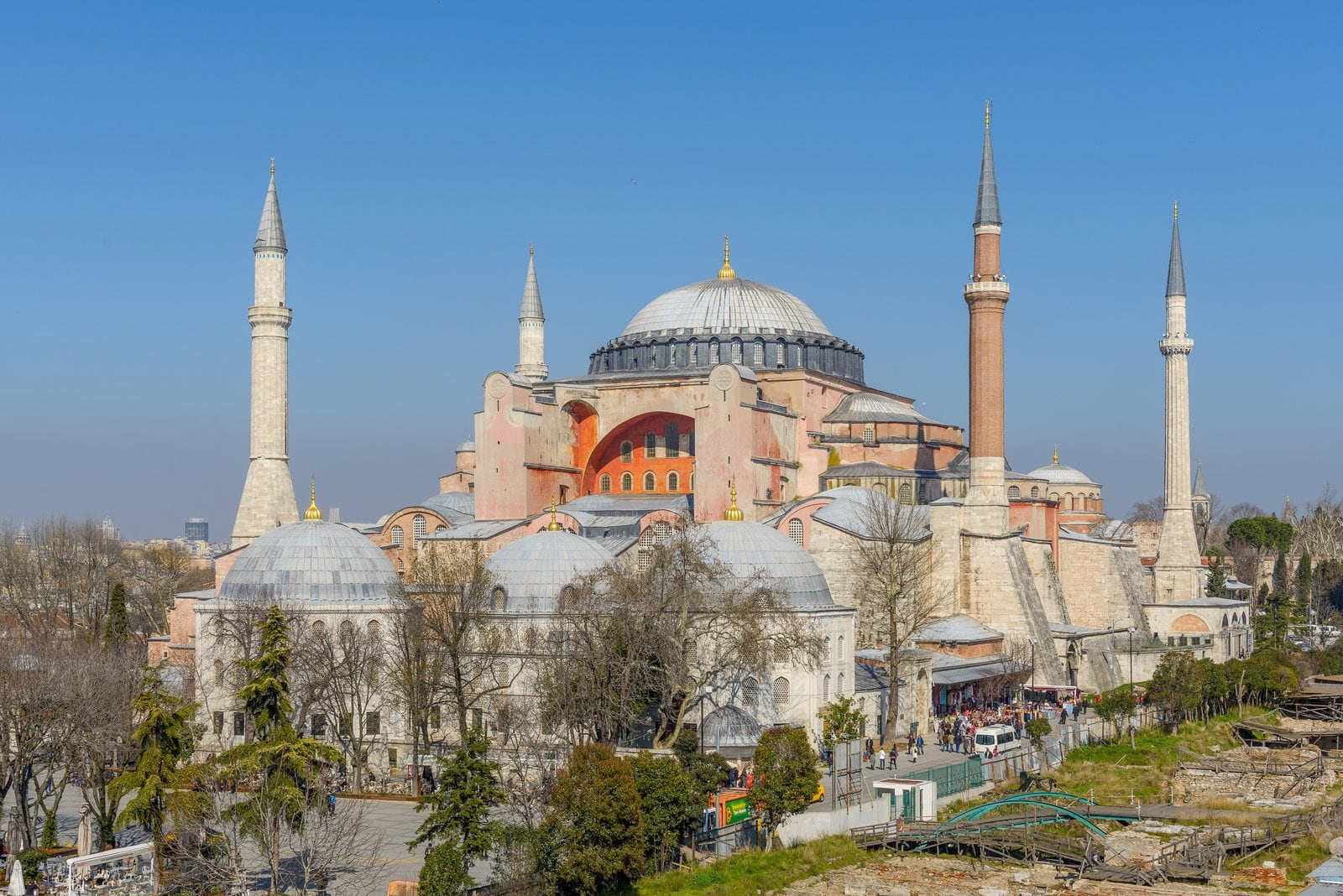
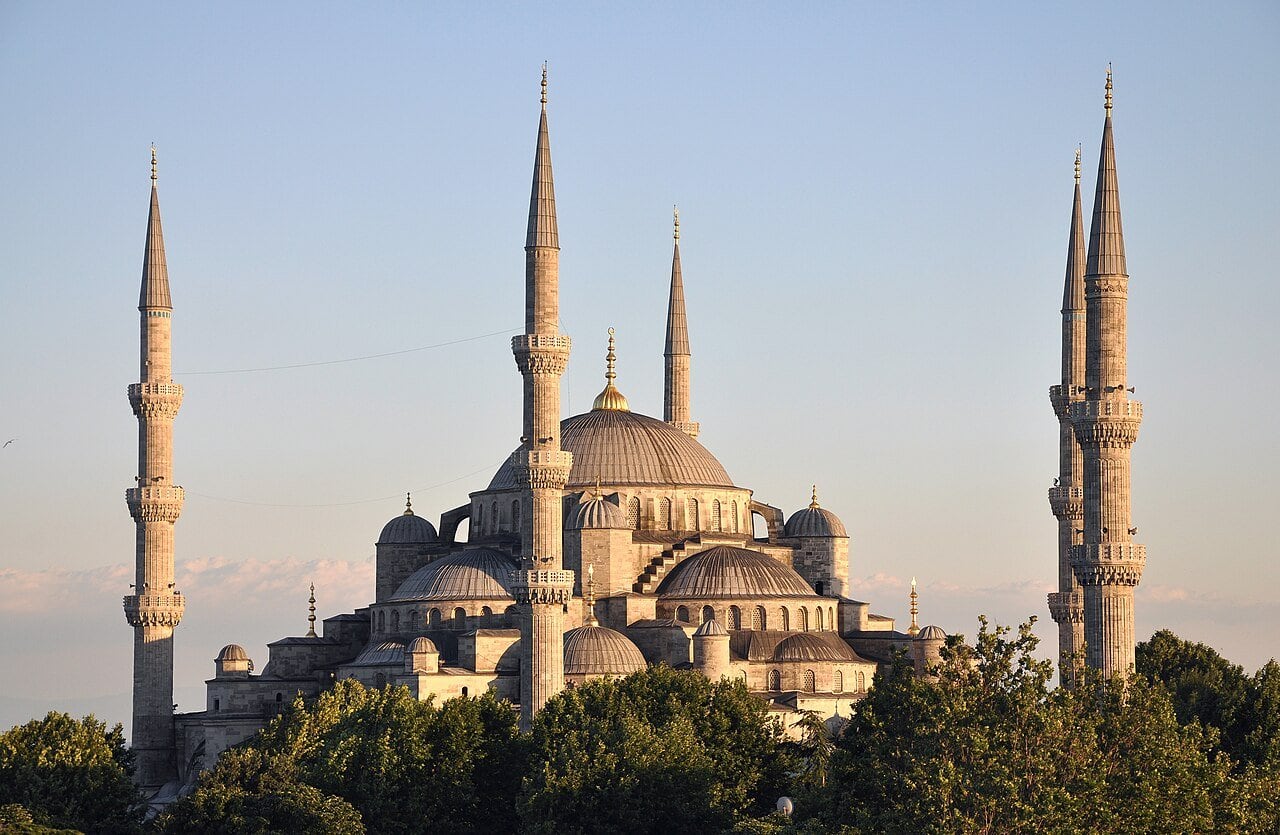
Blue Mosque visitor guide: the tiles, six minarets and your visit
- Mosques
- Sultanahmet, Fatih
- Free
Family hotels closest to Blue Mosque
-
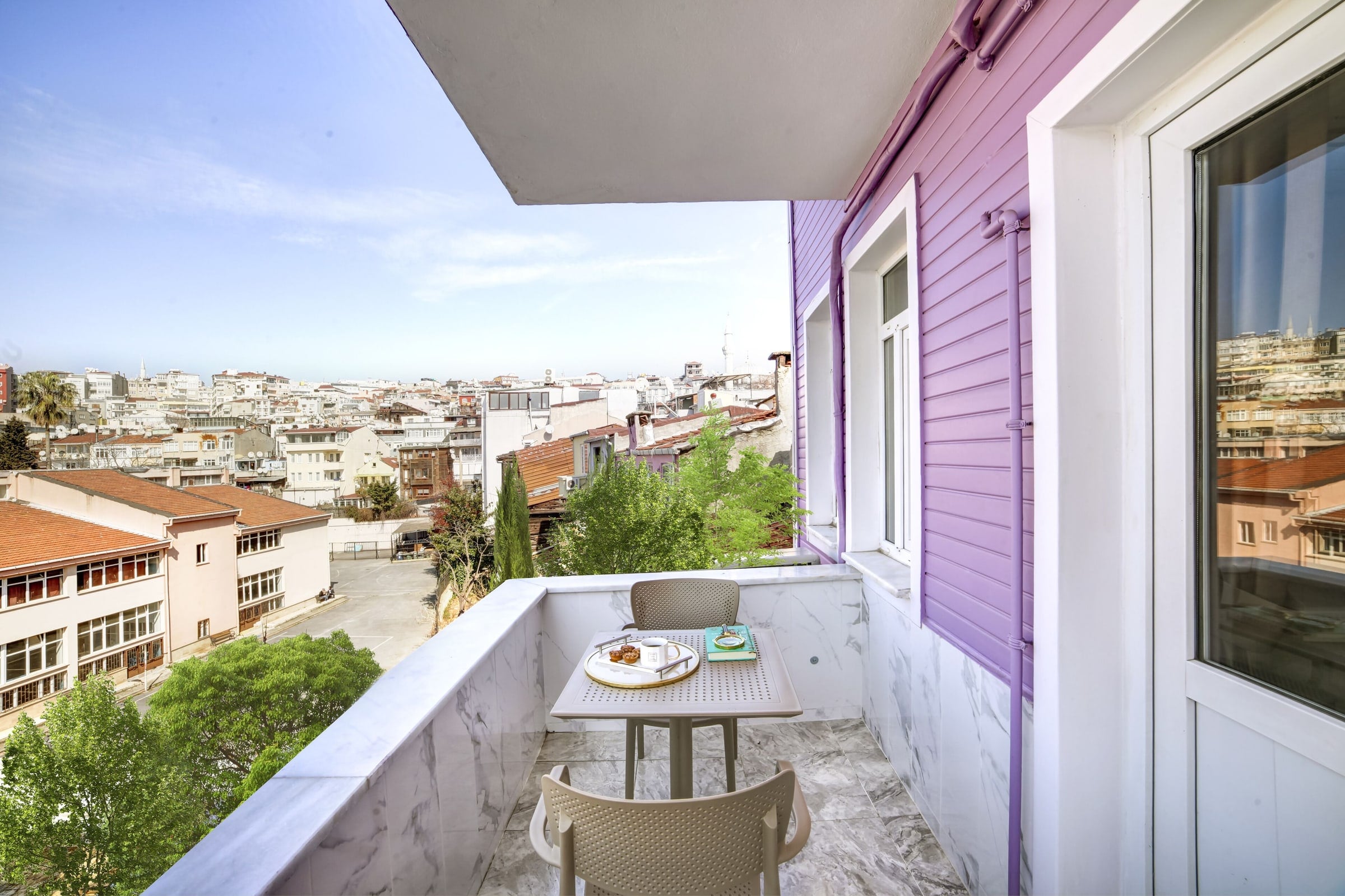
Green Life Apart Hotel
Blue Mosque: 7 min walk (time given by the hotel) Walking route
-
Seven Roses Apart Hotel
Blue Mosque: 7 min walk (time given by the hotel) Walking route
Visitor information
| Type | Imperial mosque (with six minarets) |
|---|---|
| Built | 1609–1617 |
| Commissioned by / architect | Sultan Ahmed I; architect Sedefkâr Mehmed Ağa |
| Neighbourhood | Sultanahmet, Fatih |
| Opening hours | Daily from morning until the night (isha) prayer; visitors are not admitted during prayer times |
| Admission | Free (there is a donation box) |
| Time needed | 30–45 min |
| Getting there | T1 Sultanahmet stop, 4 min walk |
| From Sultanahmet Square | About 4 min walk (280 m) |
| Pushchair / stroller | Partly suitable. The courtyard and visitor entrance are level; strollers are not allowed inside |
| Best time | Around 9 am, before the midday prayer |
Opening hours and prices can change; check the official website before you go. Map links open in Google Maps.
Why is it called the “Blue Mosque”?
The İznik tiles covering the inner walls, especially the upper levels, show tulips, carnations, cypresses and roses in shades of blue and green. When light from more than 260 windows falls on these tiles, the interior takes on a bluish tone; that is where European travellers got the name “Blue Mosque”. In Turkish it is called Sultanahmet Camii after the sultan who built it, and the whole neighbourhood takes its name from the mosque.
Architecture and the six minarets
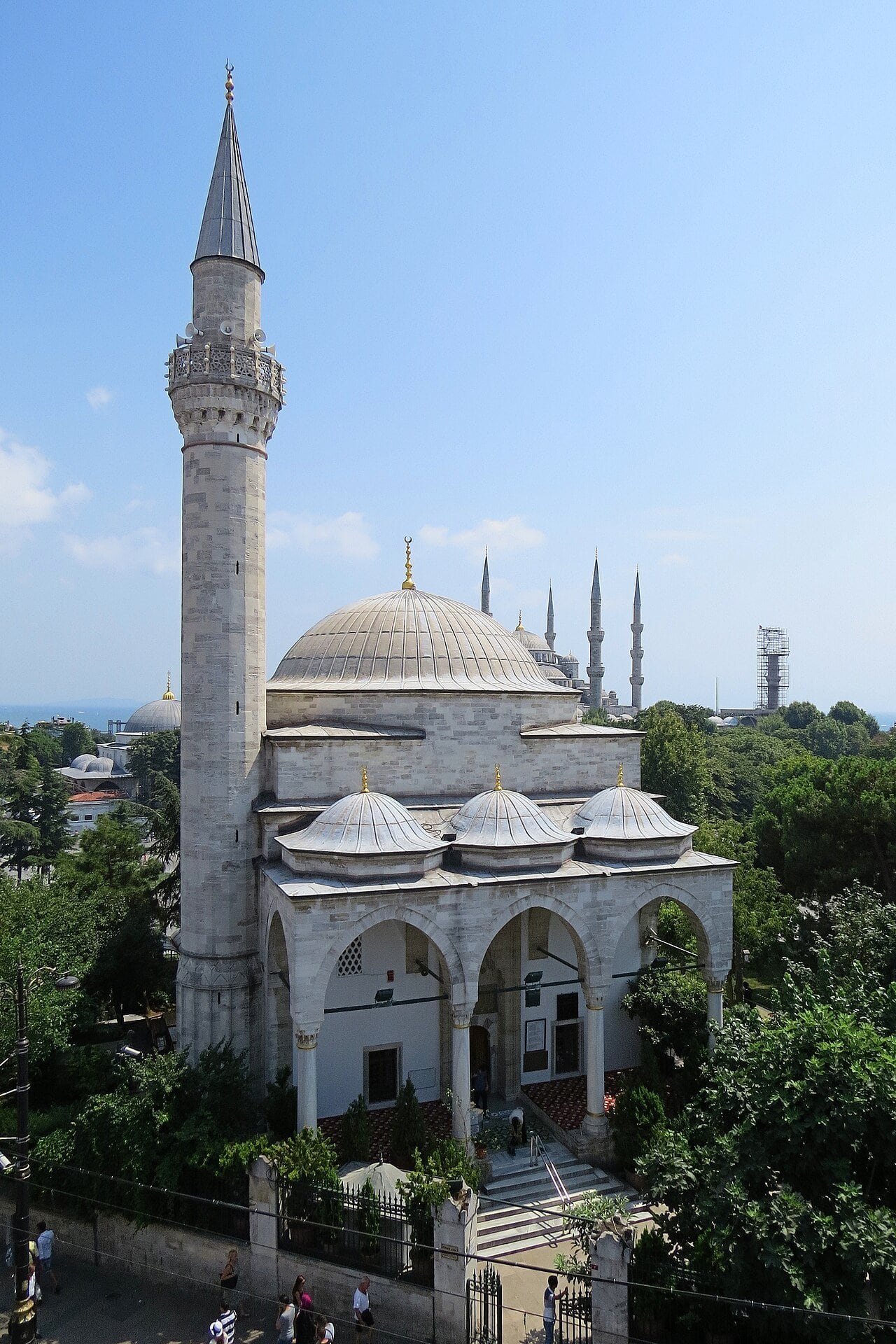
Sedefkâr Mehmed Ağa, a pupil of Mimar Sinan, supported the central dome with four half-domes and four thick piers known as “elephant feet”; the plan is an enlarged version of the Şehzade Mosque. The six minarets caused controversy because at the time only the Great Mosque of Mecca (Masjid al-Haram) had six; according to legend, the problem was solved by adding a seventh minaret in Mecca. The mosque complex includes a madrasa, a primary school, a hospital, a soup kitchen, the Arasta Bazaar and the tomb of Ahmed I. A major restoration that began in 2018 was completed in 2023.
Visiting information and rules
The visitor entrance is on the courtyard side facing the Hippodrome (Sultanahmet Square); there is a separate entrance for worshippers. Women need to cover their hair and everyone must cover shoulders and knees; free headscarves and wraps are handed out at the entrance. Shoes go into the bags provided at the door. The mosque closes to visitors for about an hour at each of the five daily prayers, and for longer at the Friday midday prayer.
Visiting tips
- For the best view of the mosque, look from the fountain in Sultanahmet Park or from the main courtyard gate on the Hippodrome side.
- The courtyard is also beautiful when it is lit up after the evening call to prayer; add it to an evening walk.
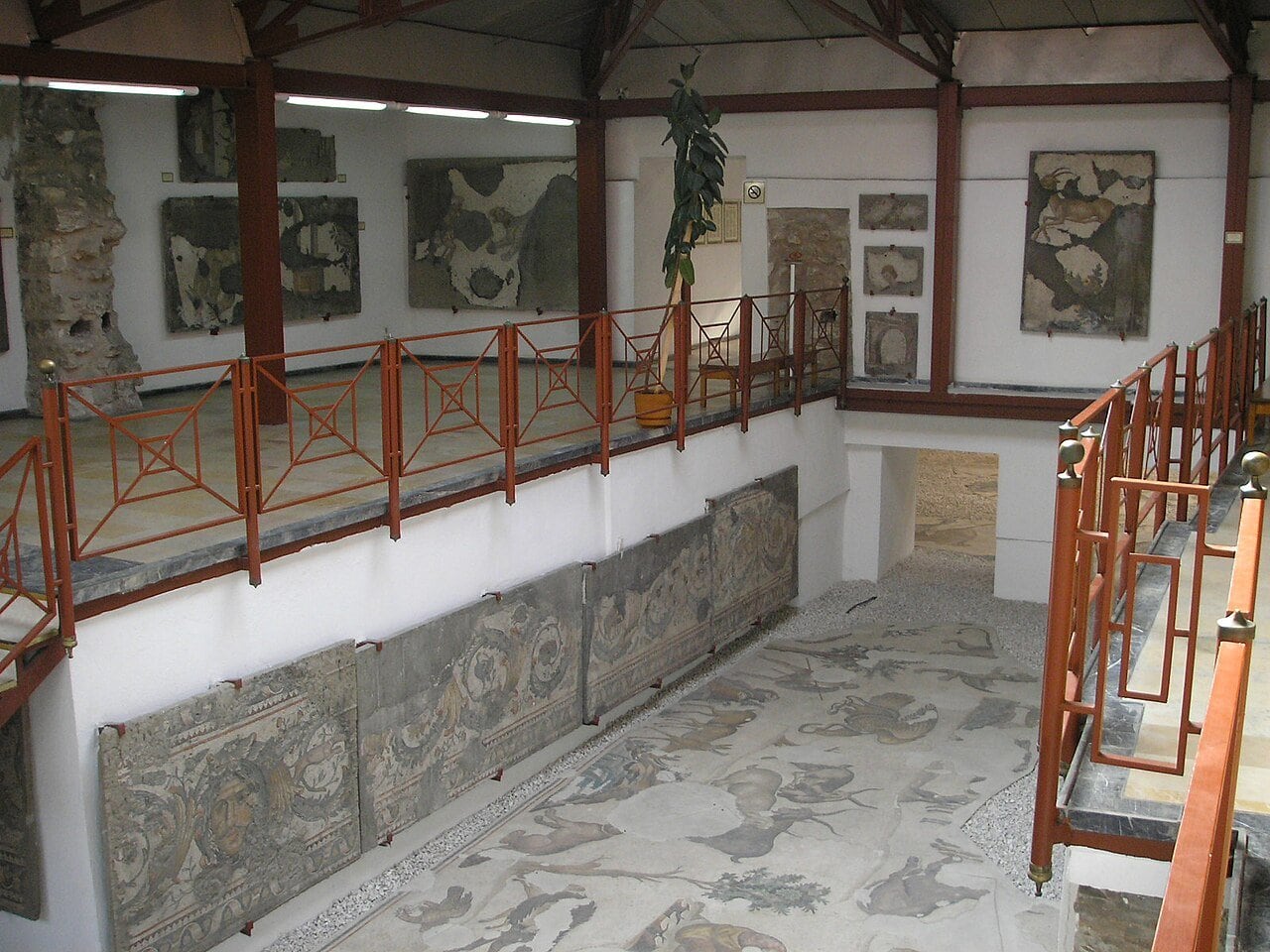
- The Arasta Bazaar and the Great Palace Mosaics Museum behind the mosque are a 3-minute walk away.
Our family hotels near Blue Mosque
Walking times are approximate and measured from the hotel door; where the hotel gives its own time, we show that.
-
Green Life Apart Hotel
Blue Mosque: 7 min walk (time given by the hotel) Walking route
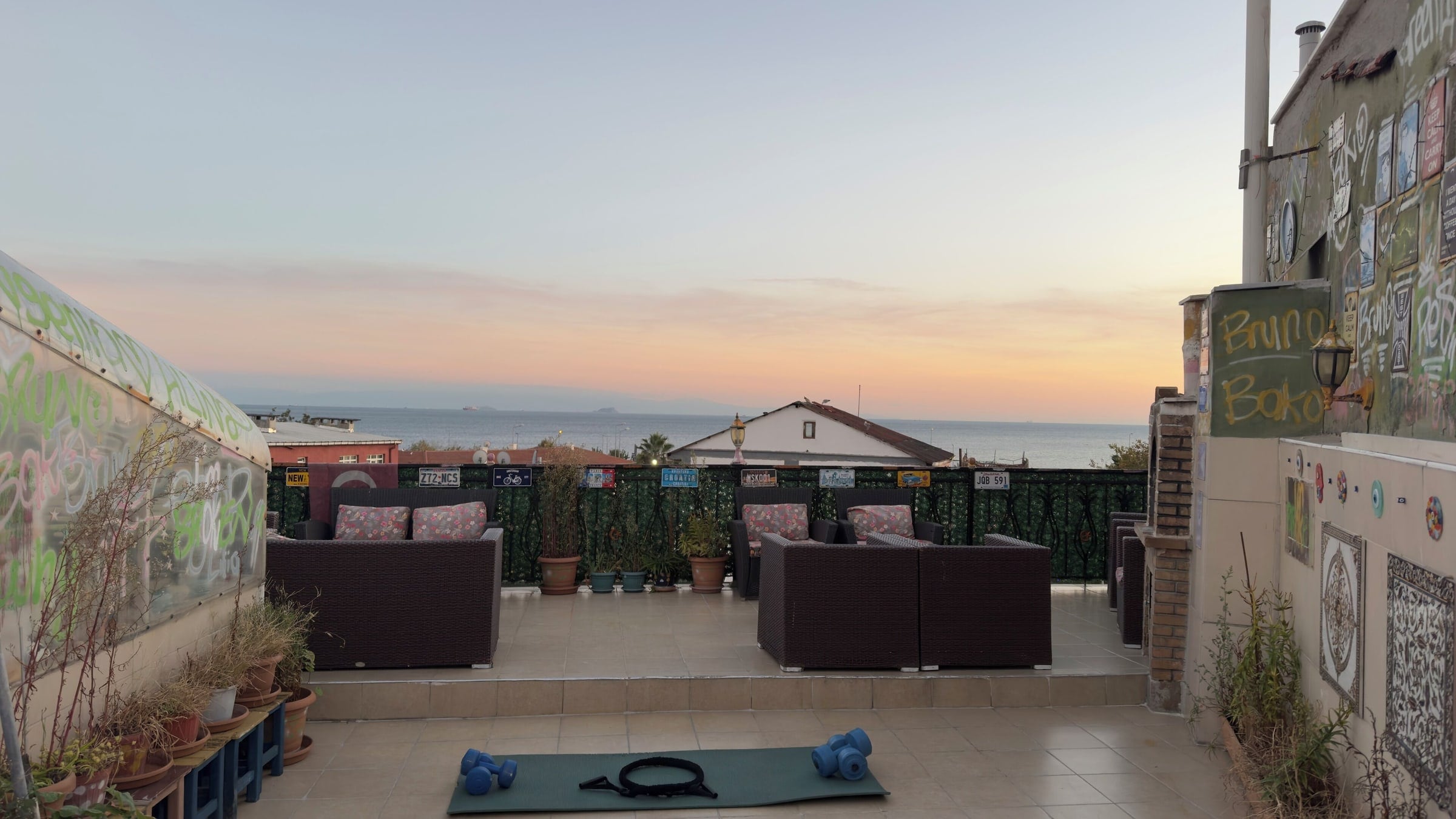
Family-run apartments with kitchenettes and a sea-view roof terrace in Küçük Ayasofya
-
Sareban Hotel
Blue Mosque: 7 min walk (time given by the hotel) Walking route
An alcohol-free family hotel in Küçük Ayasofya, looking out to the Marmara
-
Seven Roses Apart Hotel
Blue Mosque: 7 min walk (time given by the hotel) Walking route
Apartments with kitchens in Küçük Ayasofya, with roomy options for larger families
-
Emirhan Inn Hotel
Blue Mosque: 10 min walk (time given by the hotel) Walking route
A budget-friendly hotel with free breakfast in Küçük Ayasofya
Frequently asked questions
How many minarets does the Blue Mosque have?
The Blue Mosque has six minarets. No other historic mosque in Istanbul has six, which is why its silhouette is easy to recognise from afar.
Are the Blue Mosque and Hagia Sophia the same place?
No. The two buildings face each other from either end of Sultanahmet Park, about 400 metres apart. Hagia Sophia is a 6th-century Byzantine building, while the Blue Mosque is an Ottoman mosque built in the 17th century.