
Istanbul’s historic water cisterns: Basilica, Binbirdirek and Şerefiye
In Byzantine times Constantinople’s water was brought from outside the city by aqueducts and stored in huge underground cisterns. Today three of these cisterns, all within a few hundred metres of Sultanahmet Square, are open to visitors. The Basilica Cistern is the most famous, with its Medusa-head columns; Binbirdirek is Istanbul’s second-largest covered cistern; and Şerefiye, with its light and sound show, is the most recently opened.
Cisterns stay cool in summer and dry on rainy days, which makes them a favourite stop for families with children. Because of the stairs, a baby carrier is better than a stroller.
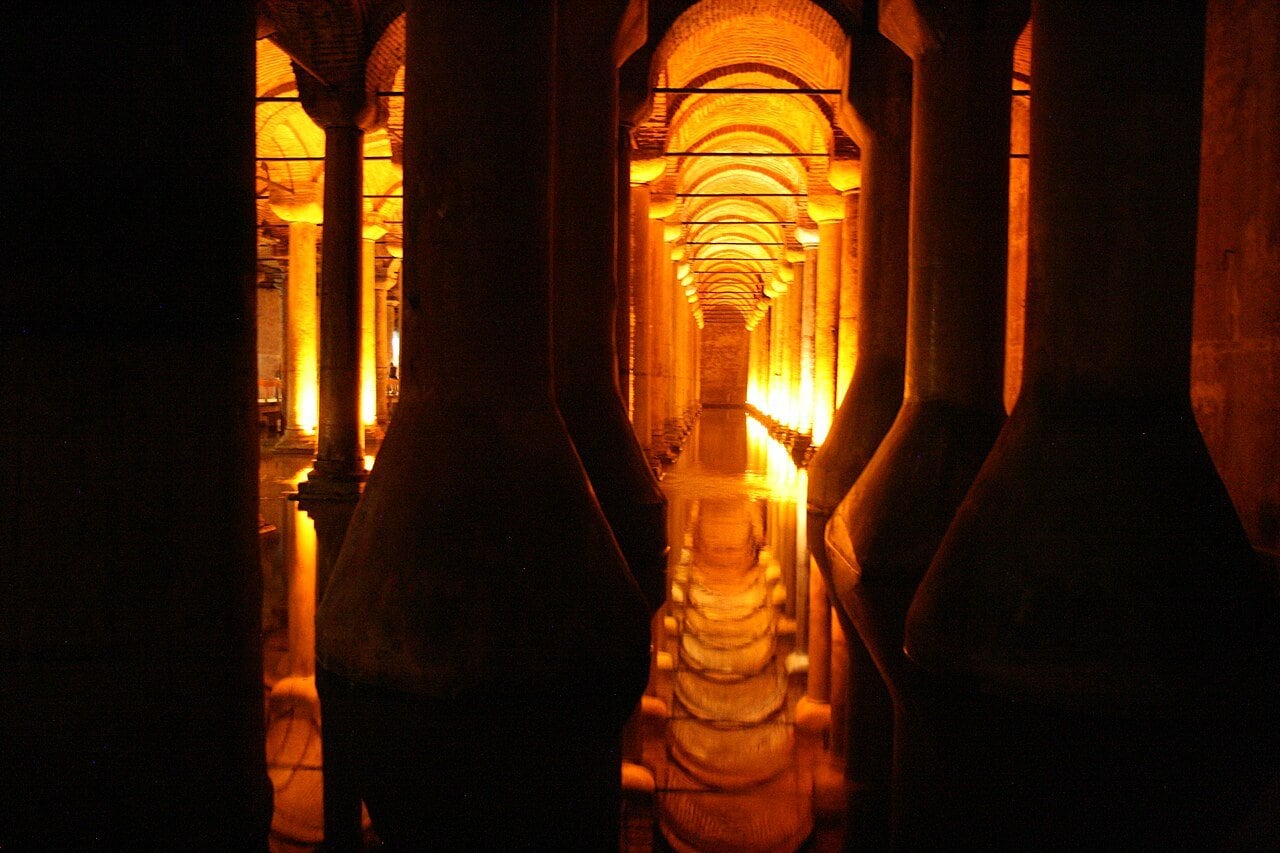
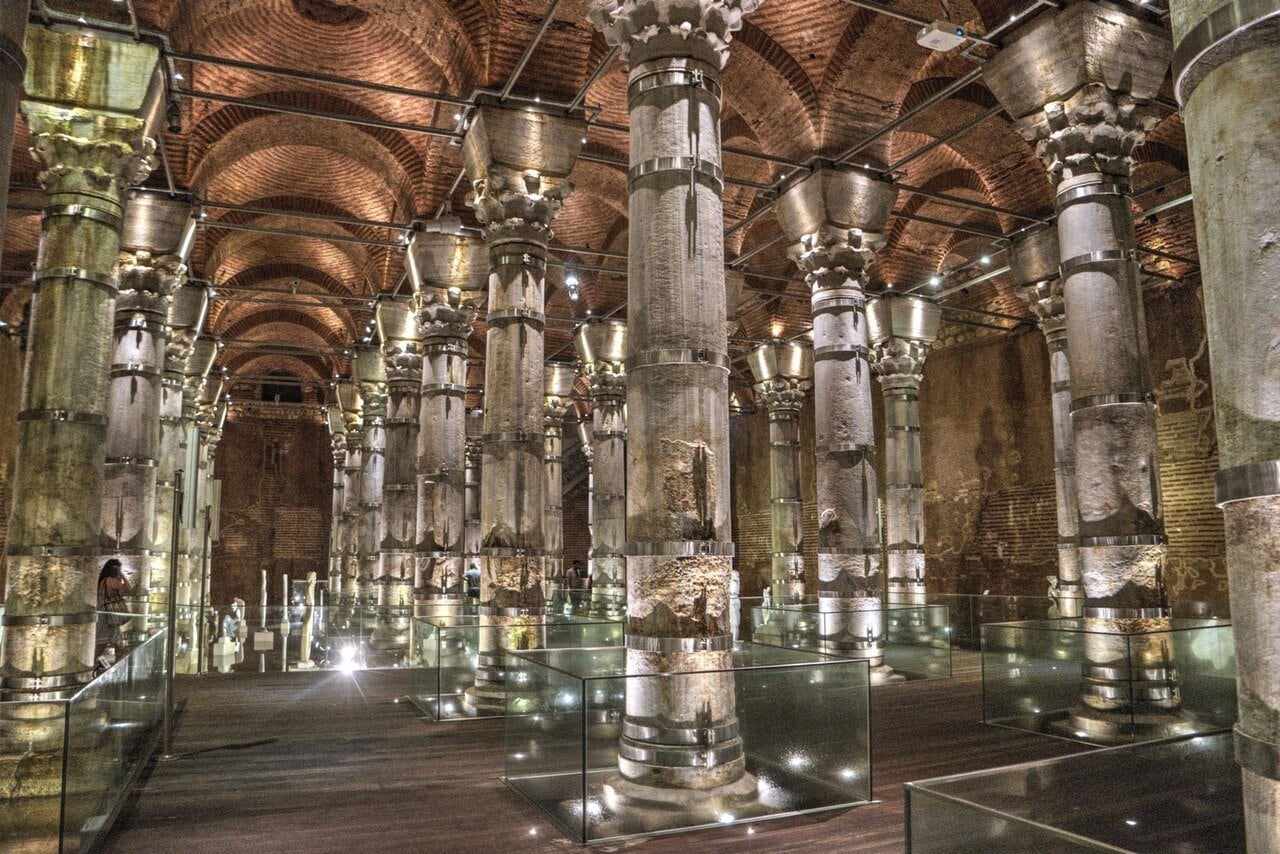
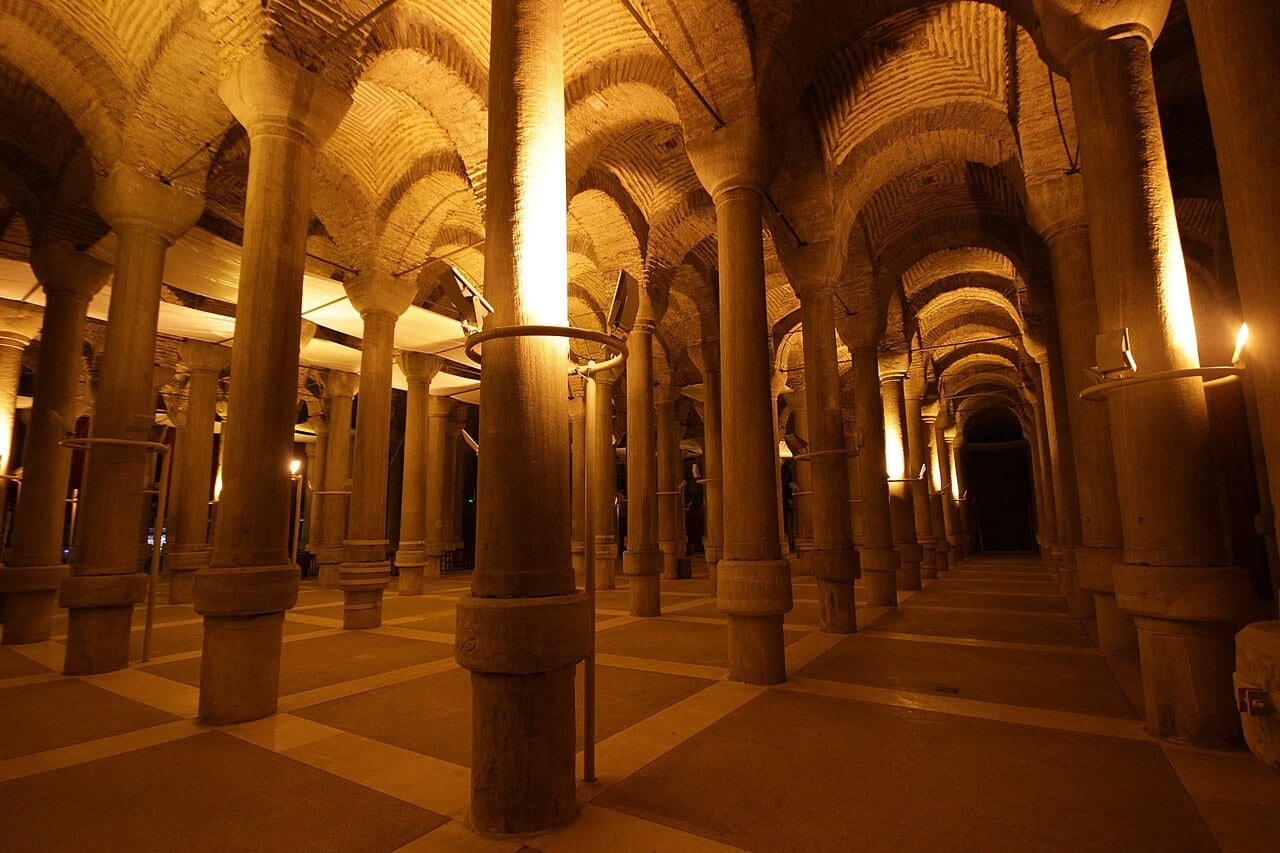
Which cistern should you see?
If you only have time for one, choose the Basilica Cistern: its size, the Medusa heads and the lighting are unique, but its queue is also the longest. For those avoiding crowds, Binbirdirek and Şerefiye are quieter alternatives that take less time. All three are 5–10 minutes’ walk from each other, so you can see them all in one morning.
Frequently asked questions
How many cisterns are there in Istanbul?
More than 100 cisterns from the Byzantine period are known, most of them under buildings. The main ones open to visitors are the Basilica (Yerebatan), Binbirdirek and Şerefiye (Theodosius) cisterns.
Can you visit the cisterns with a stroller?
It is difficult because there are stairs at the entrances. In the Basilica Cistern the walkway inside is level, but the way down and up is by stairs; a baby carrier or backpack carrier is easier.
Do the cisterns charge an entry fee?
Yes, all three charge for entry and the Müzekart is not accepted: the Basilica Cistern is run by Kültür AŞ, a company of the Istanbul Metropolitan Municipality, Şerefiye by the Fatih Municipality and Binbirdirek by a private operator.